00 engagement
01 problem
Validating digital cluster UX for micromobility vehicles (like e-scooters and e-bikes) typically stalls until physical production hardware is assembled. Without an integrated hardware-in-the-loop testbed, design and software teams cannot evaluate how physical inputs (variable throttles, mode switches, external relays) feel alongside live UI, map navigation, and conversational AI.
02 approach
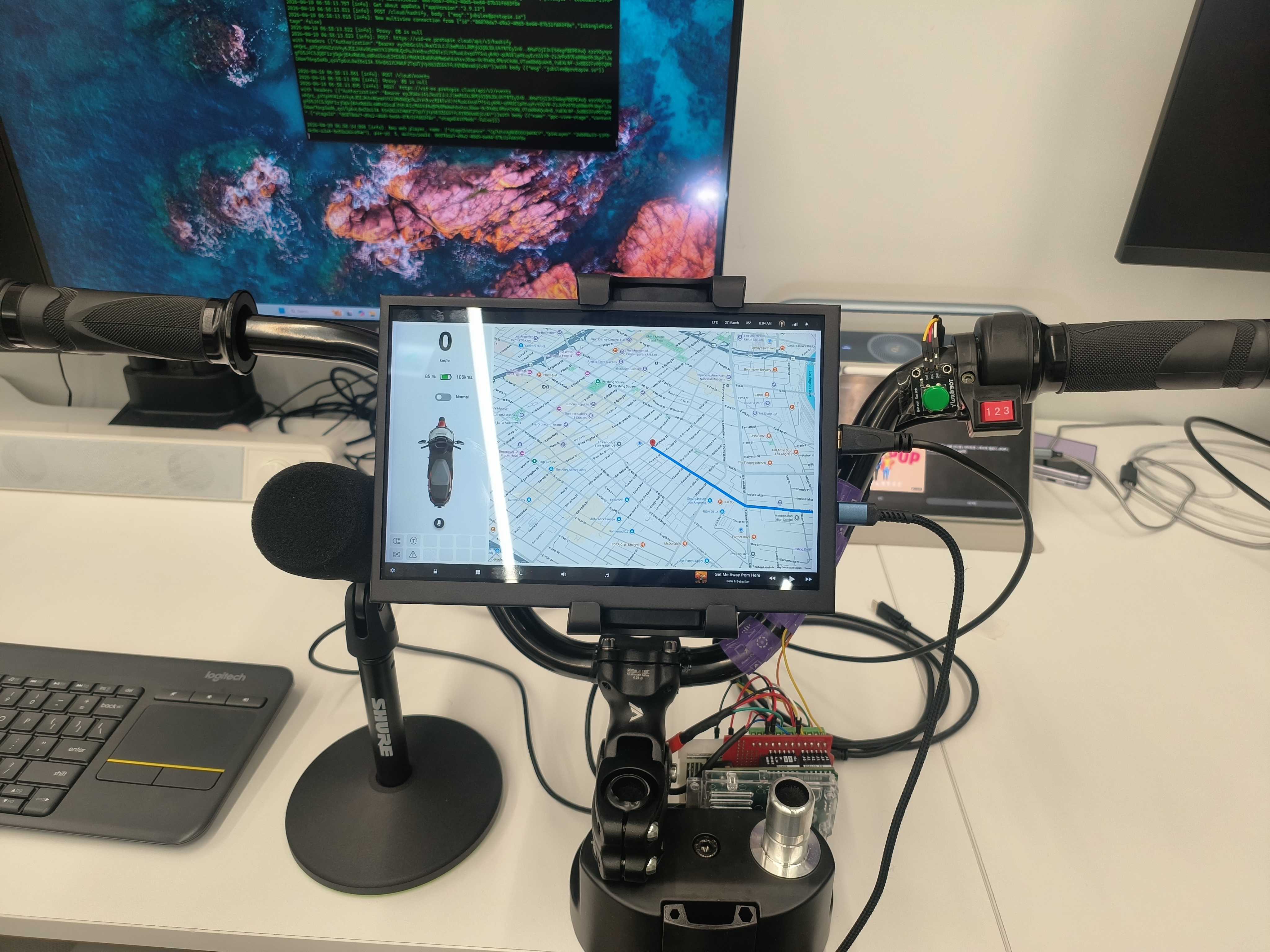
Fabricated a bench rig with physical handlebar controls (throttle potentiometer, voice-trigger push button, riding mode switch, and an external 12V LED headlight relay) driven by an Arduino.
Engineered a custom Node.js / Socket.IO bridge application to handle serial communication from the Arduino, stream live Google Maps & Places API routes, and broker WebSocket messages to ProtoPie Connect.
Integrated Gemini AI via multimodal voice APIs to process driver requests, generate real-time navigational context, and trigger proactive rerouting dialogues when low-battery thresholds are met.
Built the interactive e-scooter cluster UI in ProtoPie Studio to display live speedometer readings, mode toggles (Eco 45 km/h cap vs. Normal 90 km/h cap), and bi-directional headlight switch states.
03 stack
04 outcome
The rig showed that full hardware-software integration can be tested early in the development cycle. Designers and developers could evaluate the complete riding UX (physical throttle feedback, mode governance, AI voice rerouting, and headlight control) long before committing to physical manufacturing.